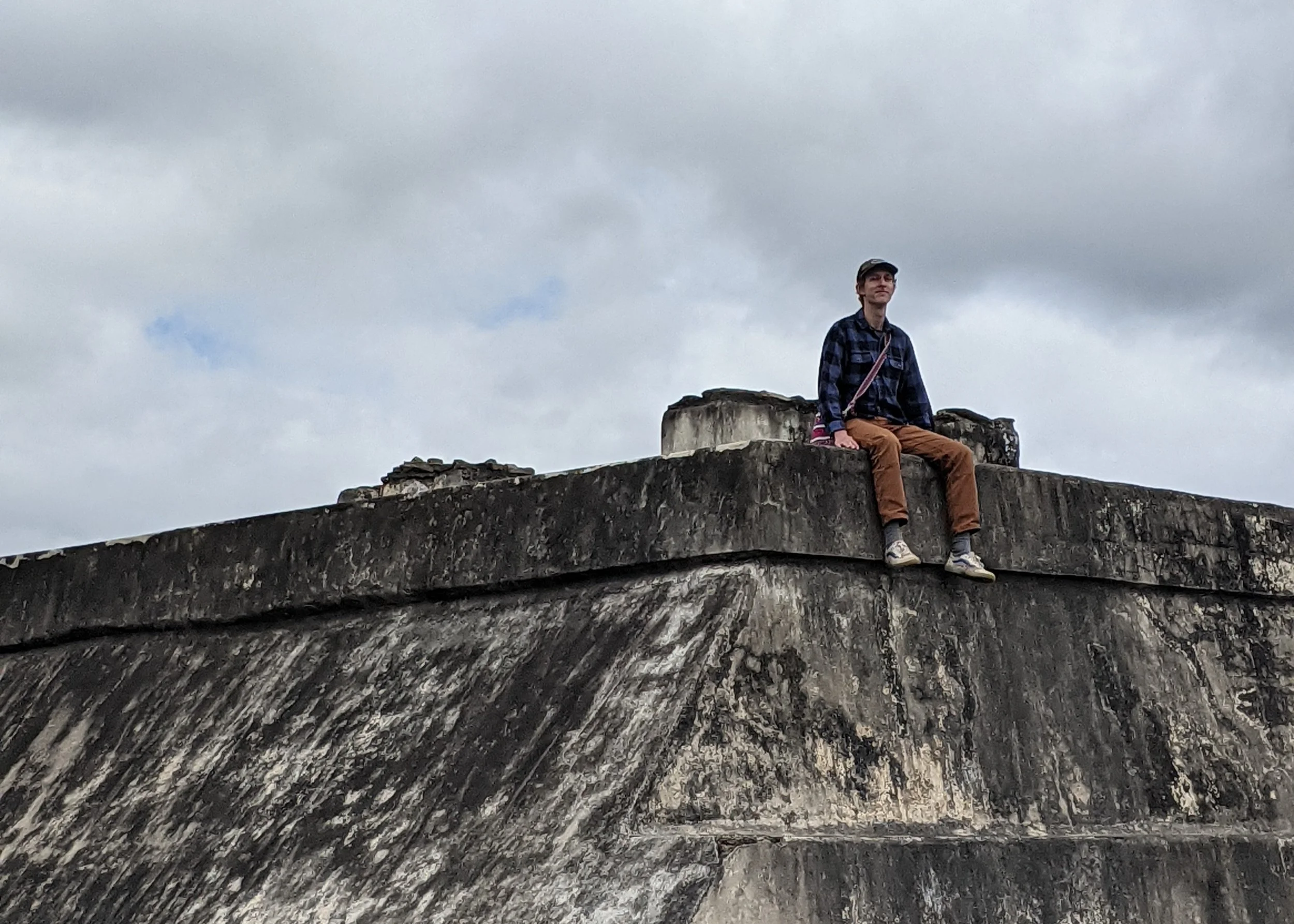
About
At the social and geographic margins of Latin America reside agrarian communities who skillfully navigate an unjust world in order to secure what is necessary for life and livelihood. My research and writing is devoted to the lived reality of marginalized people who create beauty and meaning in the face of economic inequality, racialized immigration systems, ecological degradation, and climatic change. Since 2019 I have committed myself to learning the language, cultural traditions, and environmental knowledge and techniques of a Mam Mayan community in Guatemala’s Chuchumatán Highlands. I conducted intensive ethnographic fieldwork in the Mam township of San Juan Atitán and its U.S. immigrant diaspora from 2023 to 2025, during which my love of the Mam Maya has grown into a lifetime commitment to honor and support Guatemala’s Mayan people.
My dissertation examines how Mam Mayans respond to the risks and uncertainties created by ecological, economic, and social change in the context of U.S.-bound migration. It follows the categories that Mam Mayans themselves draw upon to make sense of change and uncertainty, even when Mam sensibilities force me to cut across the academically discrete domains of ecology, language, economy, society, and religion. This holistic approach has led me to draw upon a wide range of subfields that I have engaged with throughout my education, including agroecology, ethnobiology, human geography, economic anthropology, linguistic anthropology, and religious studies.
I am originally from a working-class immigrant neighborhood in Escondido, California, before attending Harvard University as a first-generation low-income college student. This experience, along with a life-long fascination with the teachings of Jesus, inspires my commitment to use the privilege of my education to honor and raise up the lives of marginalized people.
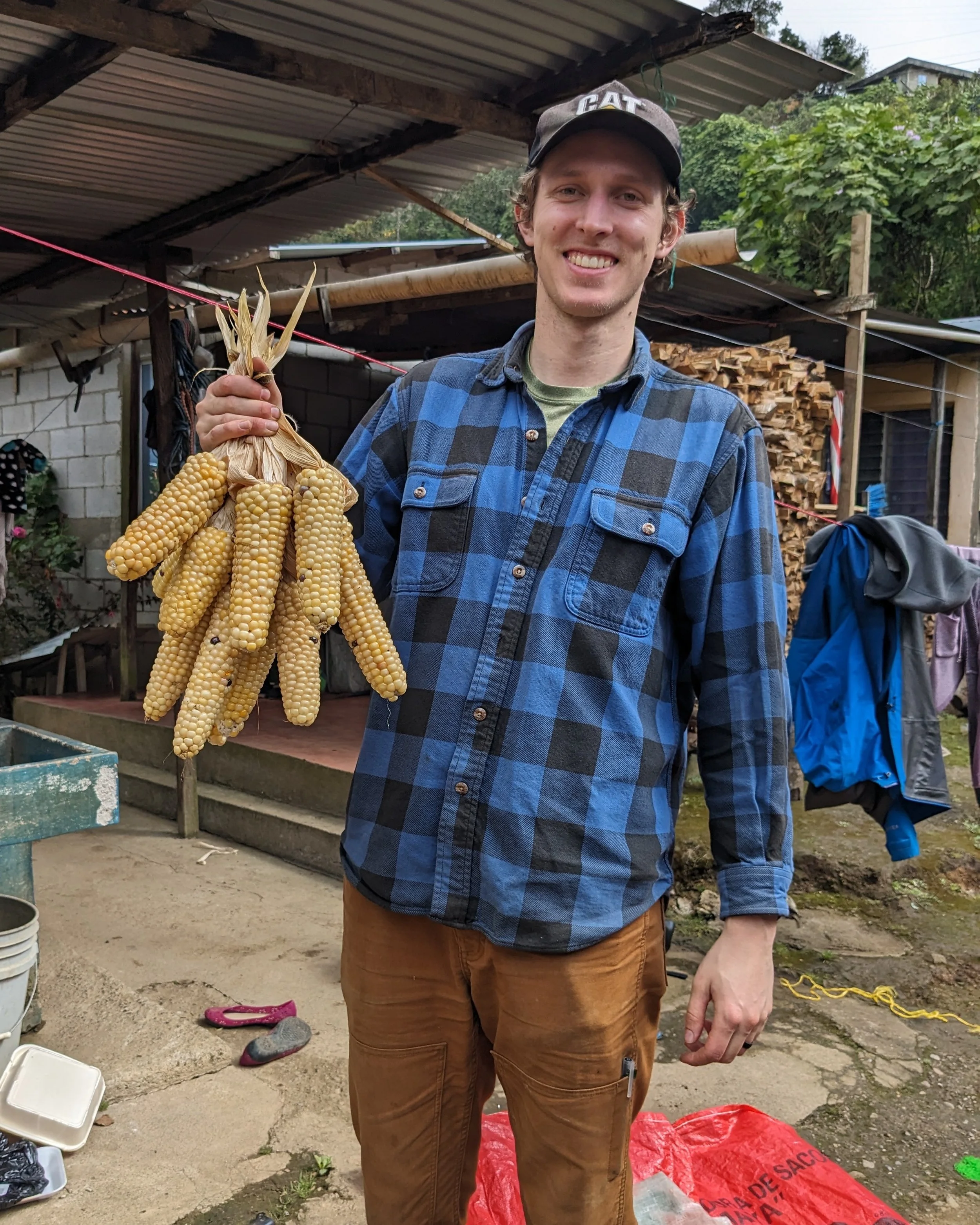
Education
Ph.D. Anthropology and Environmental Studies, Yale University
M.Phil. Human Geography, University of Cambridge
B.A. Environmental Science and Public Policy, Harvard University Cum Laude
Research Team
My research is indebted to the many men and women of San Juan Atitán who had the patience to teach me about their way of life. I’m particularly indebted to the collaborators pictured below, who spent countless hours teaching me to speak, eat, laugh, cry, work, rest and generally move through the world like a Sanjuanero. While any faults and errors in my academic writing are my own, these individuals are responsible for anything true or beautiful that I’ve been able to accomplish.
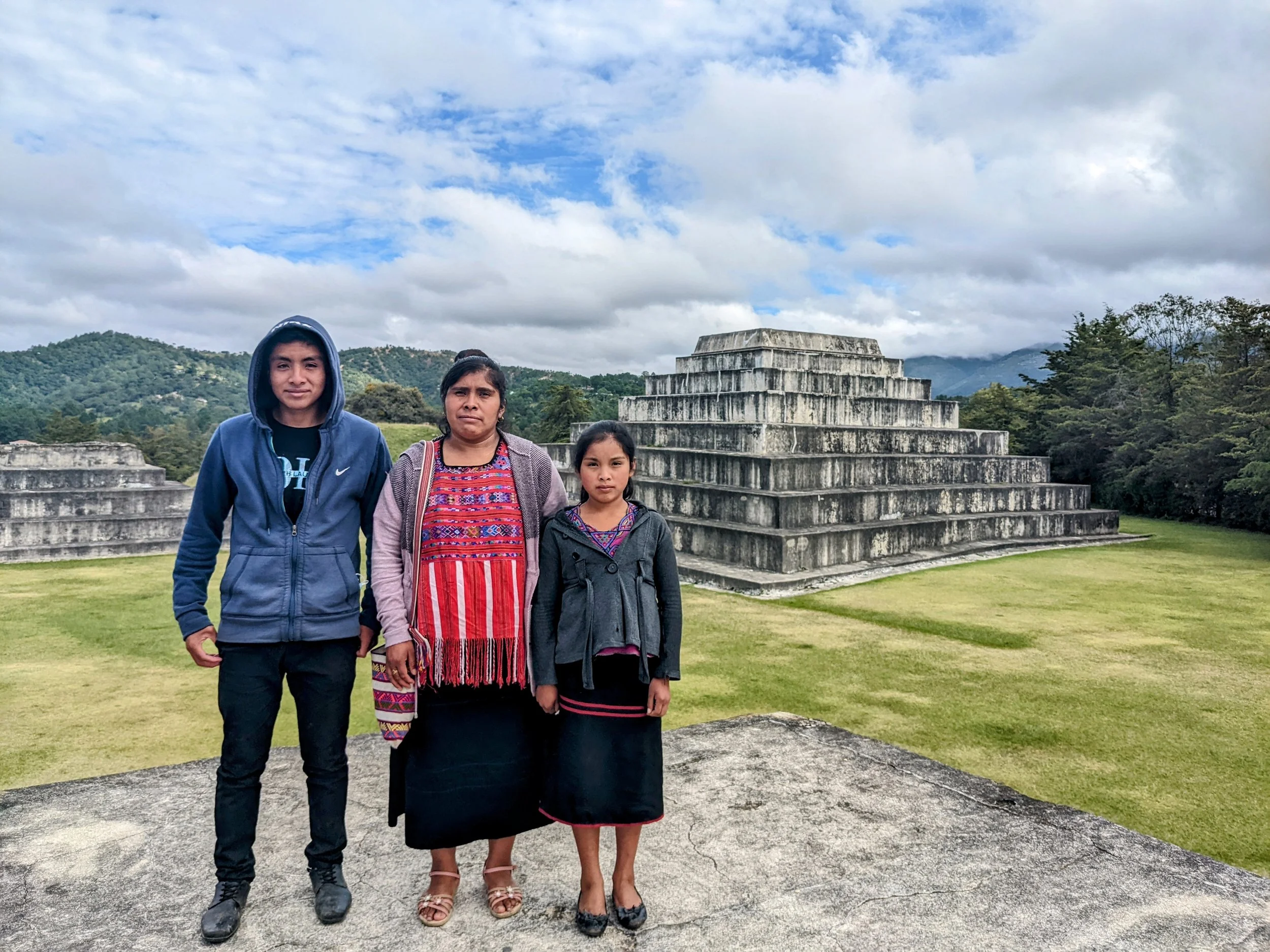
Maria Jacinto
Maria, Juan (not pictured), and their children Oliver (left), and Gladiola (right) are my host family and constant companions in San Juan Atitán. Oliver conducted agroecology survey research with me and is currently the first in his family to attend a professional school to become a nurse.
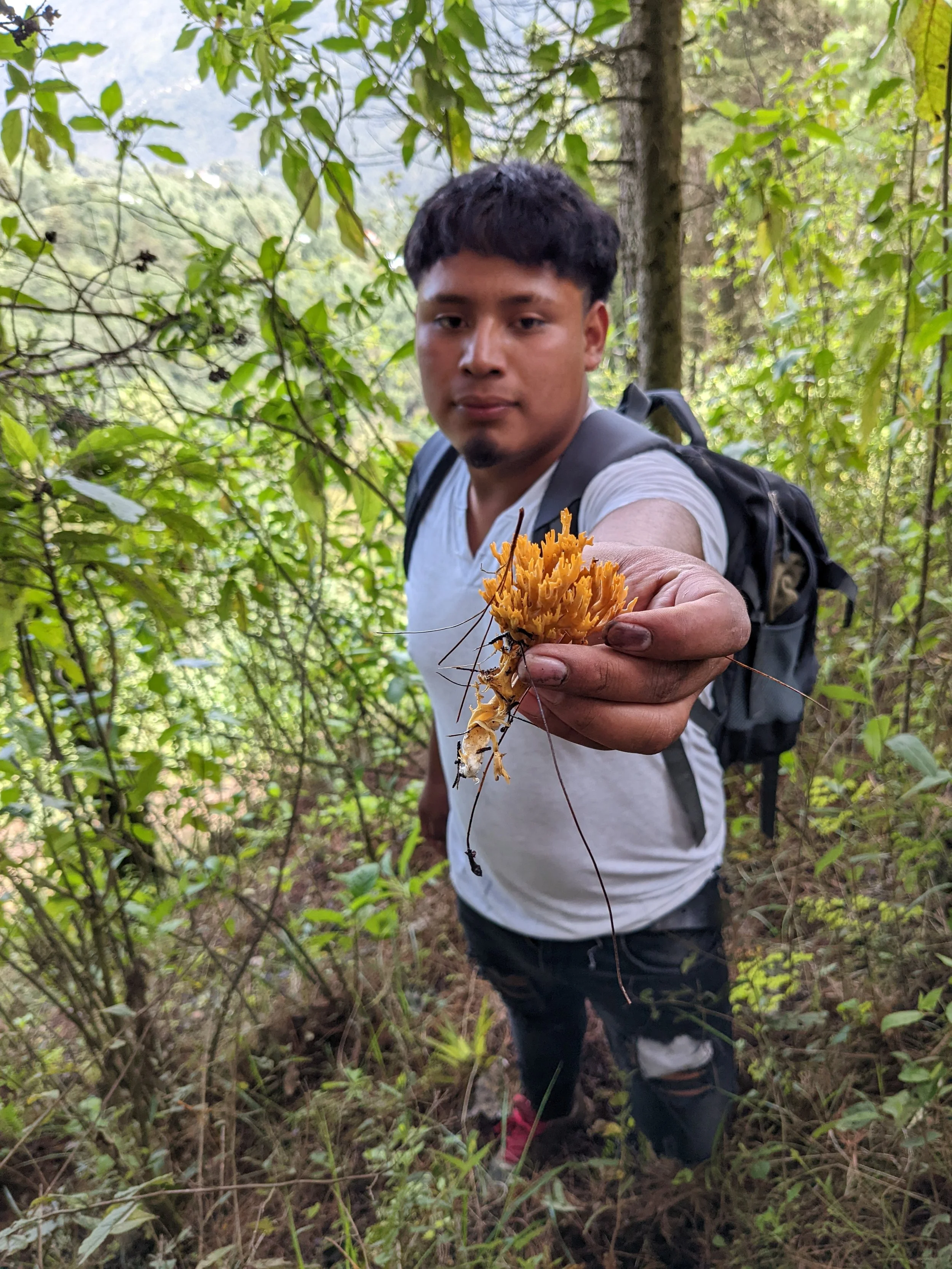
Ronaldo “Zeta” García
I met Ronaldo on my first day in San Juan Atitán, after which he was a constant companion and interlocutor. Ronaldo conducted the Mam agroecology survey with me and accompanied me for many interviews.
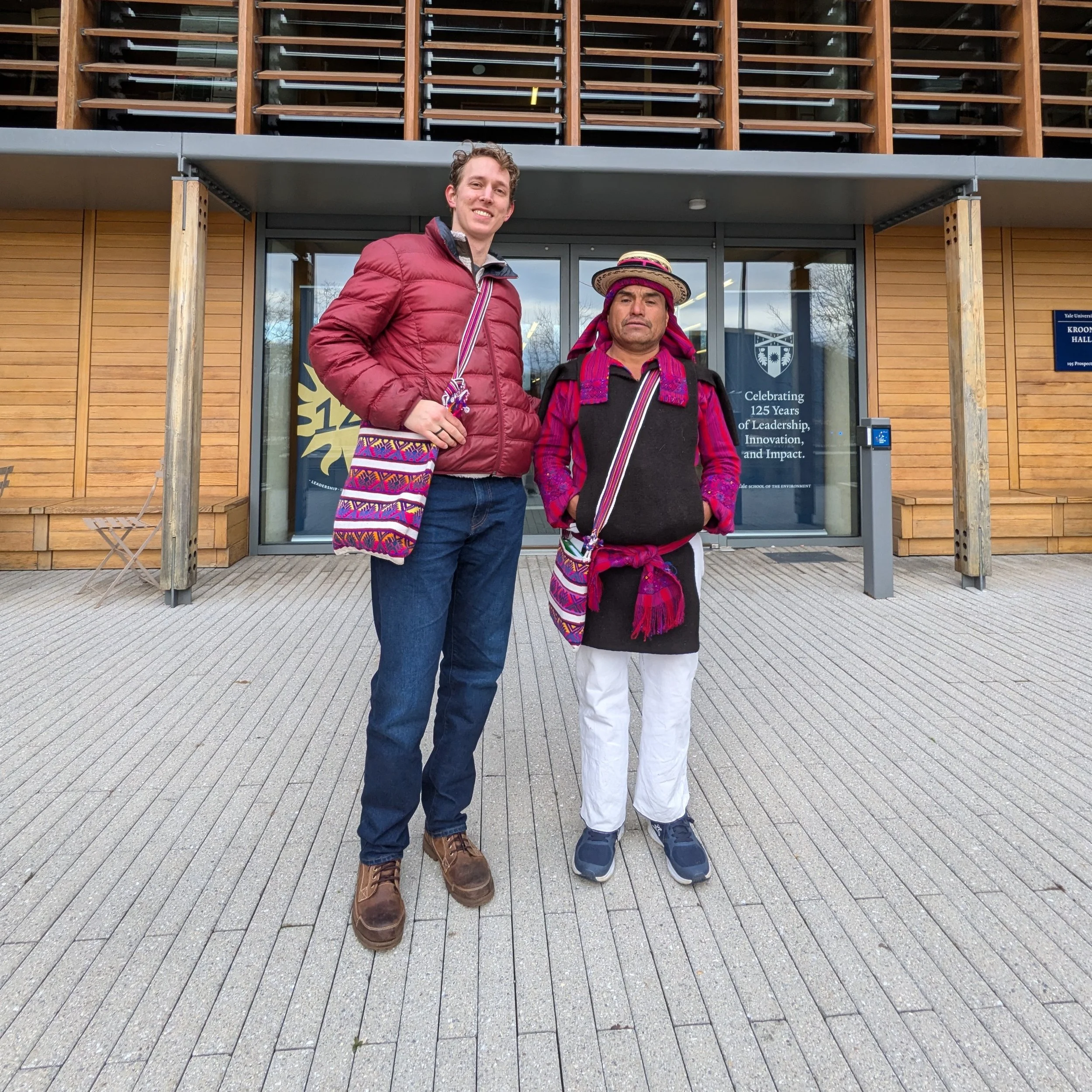
José Domingo
José is a traditional leader in San Juan Atitán, and mentored me in the art of growing maize. I conducted more hours of recorded interviews with José than any other individual. Pictured is myself and José at Yale School of the Environment’s International Society of Tropical Foresters Annual Conference.
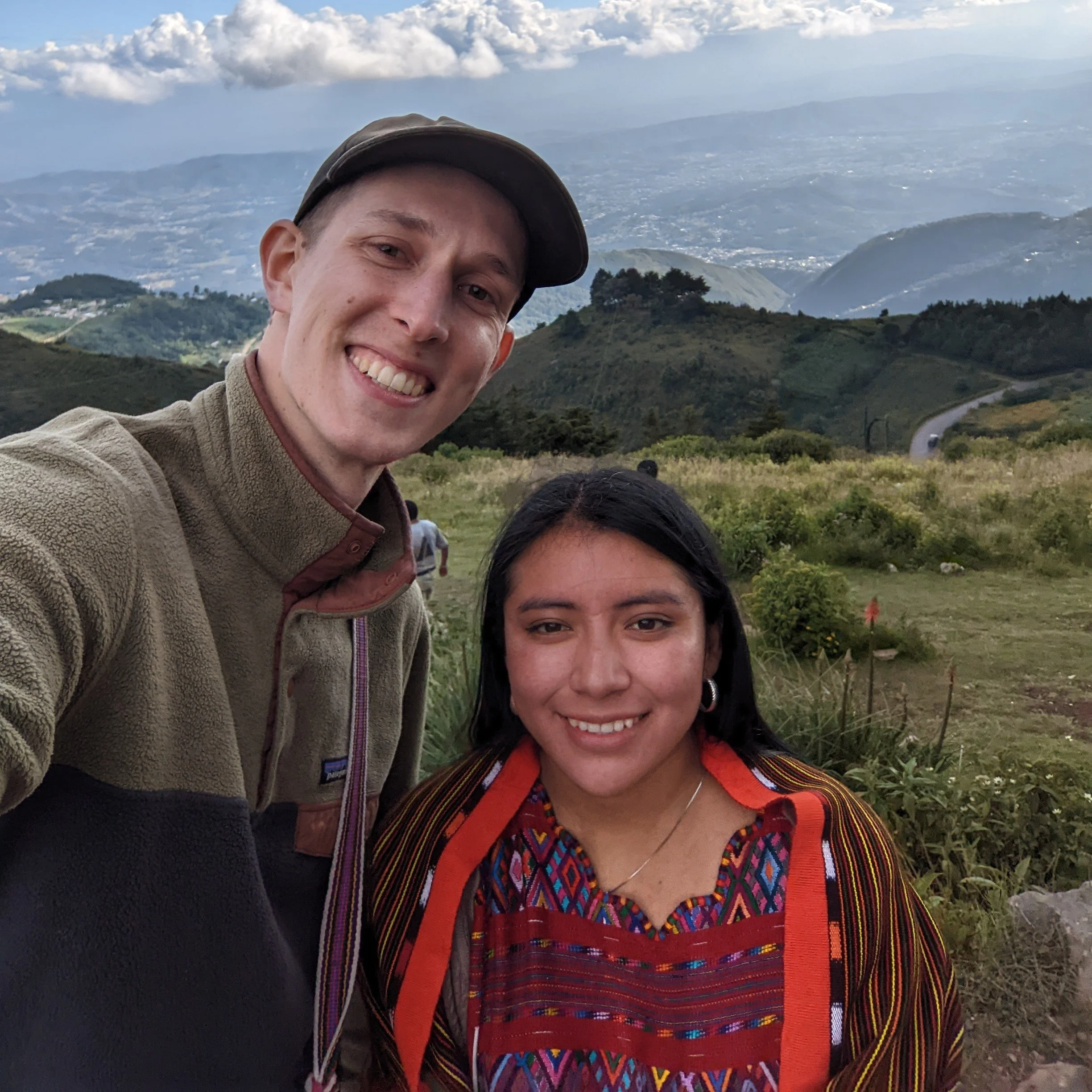
Lucrecia Carrillo
Lucrecia, and her brothers Macario and Le’ch (not pictured) regularly advised me in research design and helped me make sense of confusing interviews and encounters. I’m especially indebted to the Carrillo family for giving me the opportunity to grow my own maize field next to one of their fields.
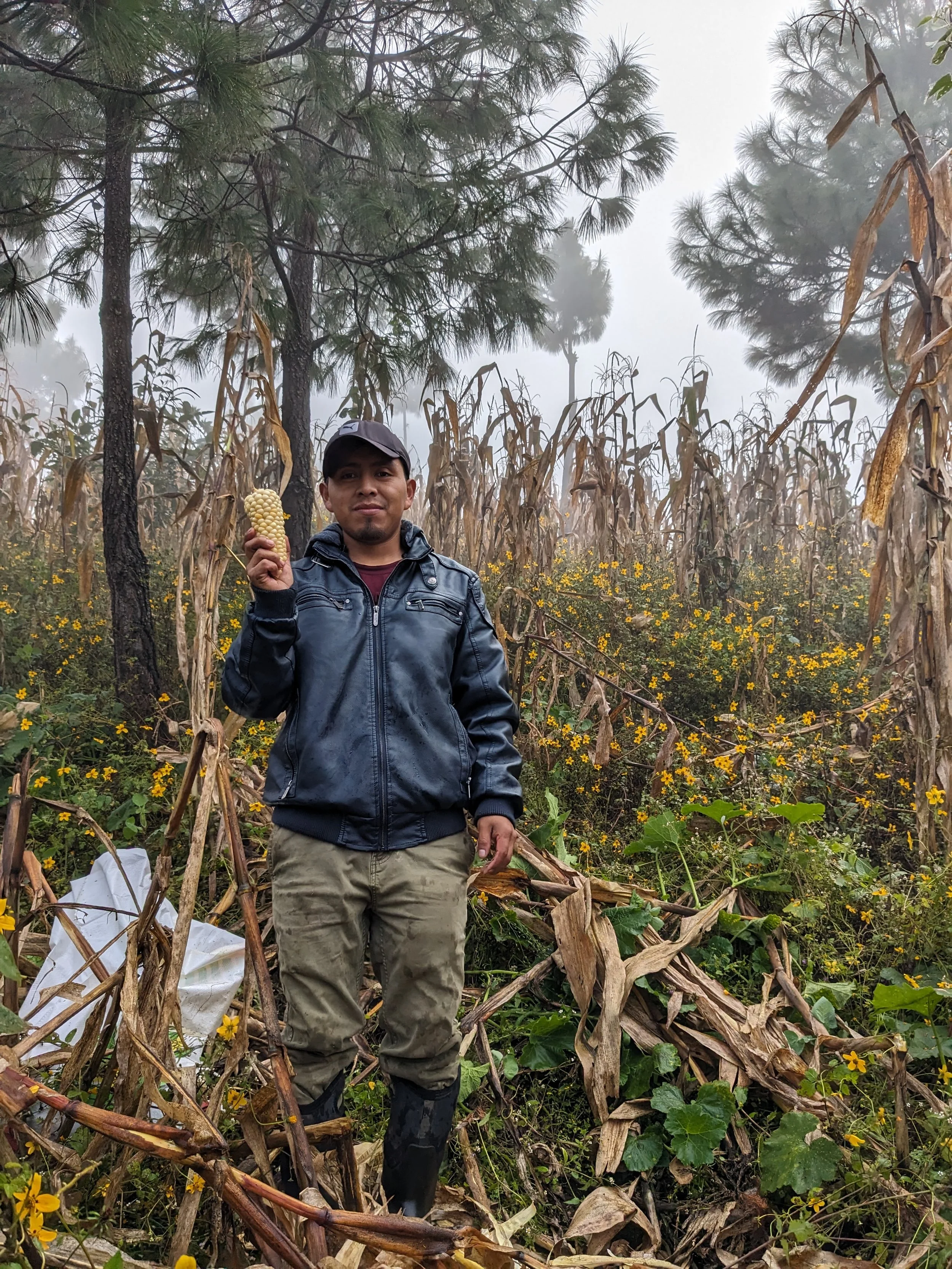
Abelino Andres
Abelino is a young community leader and served as my research assistant throughout fieldwork. Through his invitations I was able to participate in the many kinds of agricultural and environmental practices that are the foundation of my research. Abelino also accompanied me in the majority of the Mam agroecology survey and for many interviews.
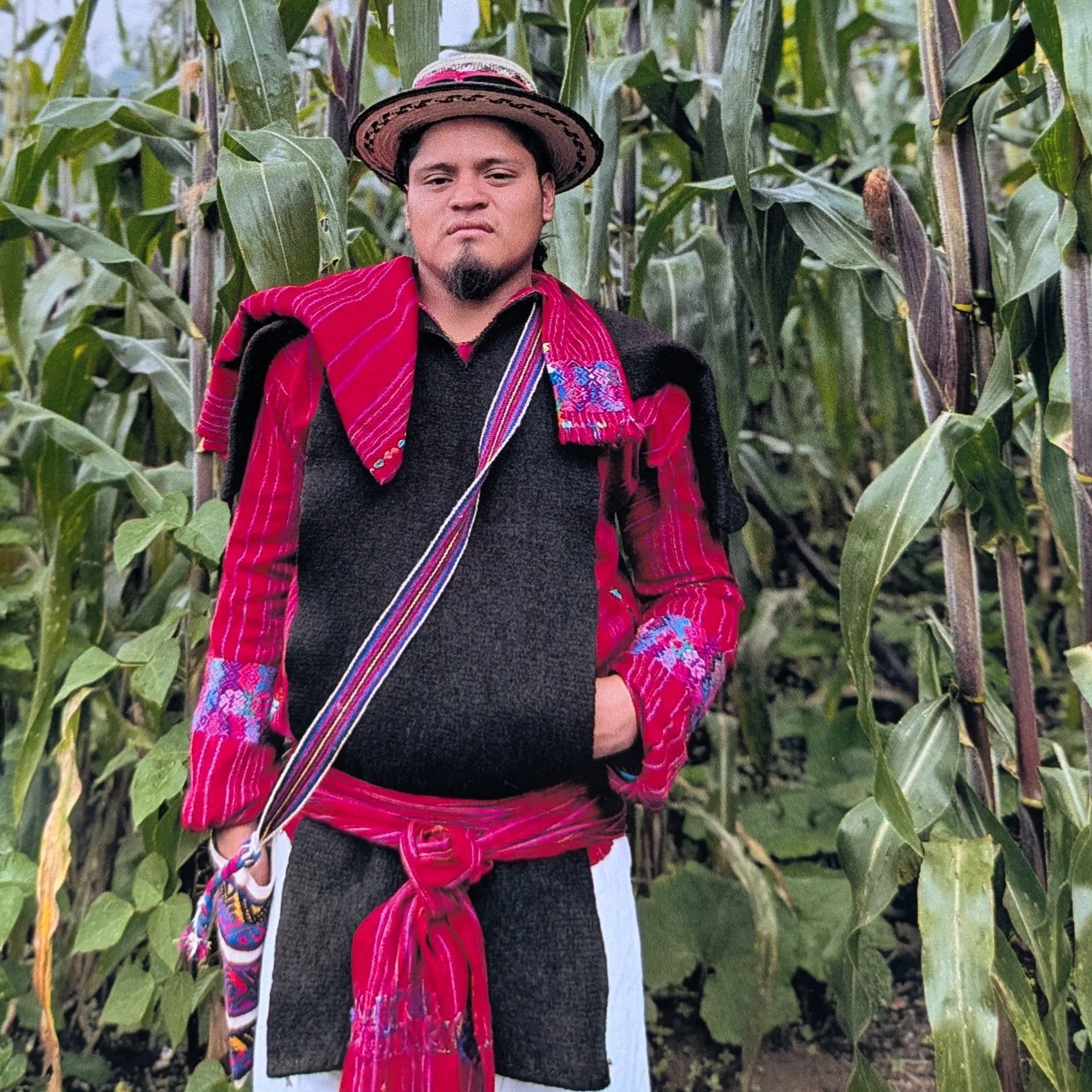
Geovani Aguilar
Geovani is a gifted photographer, and despite his youth he has a deep knowledge of Mam agricultural practices, history, and oral narratives. Geovani helped me conduct life history interviews and invited me into his project to record San Juan Atitán’s most important oral narrative.
I am also deeply indebted to Henry Sales and Lucrecia Carrillo for teaching me the foundations of Mam, and to Tessa Scott and Cristina Méndez for their willingness to learn Mam alongside me and help others learn this incredible language.